
Understanding GRAP Rules for DG Sets in Delhi NCR: A Practical Compliance Guide

Air pollution management has become an important concern for businesses operating across Delhi NCR. Manufacturing facilities, commercial buildings, hospitals, residential societies and telecom installations depend on diesel generator (DG) sets for backup power. However, generator operation is also subject to environmental regulations designed to control emissions, particularly during periods of deteriorating air quality.
The Graded Response Action Plan (GRAP) provides a framework for implementing pollution-control measures according to prevailing and forecast air quality conditions. For businesses that rely on backup generators, understanding these restrictions and preparing suitable emission-control arrangements can help reduce operational uncertainty.
What Is GRAP and Why Does It Matter for DG Sets?
GRAP is an emergency action framework implemented by the Commission for Air Quality Management (CAQM) in Delhi NCR and adjoining areas. It introduces progressively stricter pollution-control measures as air quality deteriorates.
Diesel generators are included in the wider emission-management framework because their exhaust can contribute to local air pollution. Consequently, organisations operating DG sets need to consider both their equipment's regular compliance requirements and any additional restrictions activated under the current GRAP schedule.
The applicable rules can depend on generator capacity, fuel type, emission-control arrangements, operating conditions and specific regulatory directions.
Businesses can consult the official CAQM website to access current directions, revised GRAP schedules and relevant compliance notices.
Understanding the Four GRAP Stages
GRAP is organised into four stages associated with different air-quality categories. The stages indicate escalating pollution-control action, although authorities may invoke measures in advance based on forecasts and other prescribed considerations.
Stage I: Poor Air Quality
Stage I introduces measures intended to prevent air quality from deteriorating further. Businesses should monitor official announcements, maintain their equipment properly and review applicable generator operating requirements.
Stage II: Very Poor Air Quality
As pollution levels worsen, additional restrictions may apply to generator operation and other activities. Facilities should verify whether their DG sets meet the requirements applicable to their capacity and configuration.
Stage III: Severe Air Quality
Stage III introduces more stringent measures on top of the applicable earlier-stage actions. Businesses should review the active schedule carefully and ensure that their operating decisions reflect current official directions.
Stage IV: Severe Plus Air Quality
Stage IV represents an especially serious pollution episode and brings additional emergency measures. Facilities should not assume that an arrangement permitted under ordinary operating conditions will automatically remain permitted during this stage.
Important: The active GRAP schedule and specific directions determine which restrictions apply. Businesses should consult the latest official orders rather than relying on older summaries or treating the stages as an unchanged set of rules.
Why DG Set Compliance Requires Advance Planning
Backup generators are essential for maintaining operations during power interruptions. Industrial production lines, data centres, healthcare facilities and commercial infrastructure may all depend on a reliable secondary power supply.
However, waiting until a pollution emergency occurs to assess generator compliance can create avoidable difficulties. Businesses may need time to check equipment specifications, identify an appropriate emission-control solution, arrange installation and complete any required documentation or testing.
A proactive approach helps facility managers understand their options before restrictions become more stringent.
The Ministry of Environment, Forest and Climate Change's DG set regulatory announcement provides background on the regulated operation of diesel generator sets across NCR.
How RECD Technology Supports Emission Management
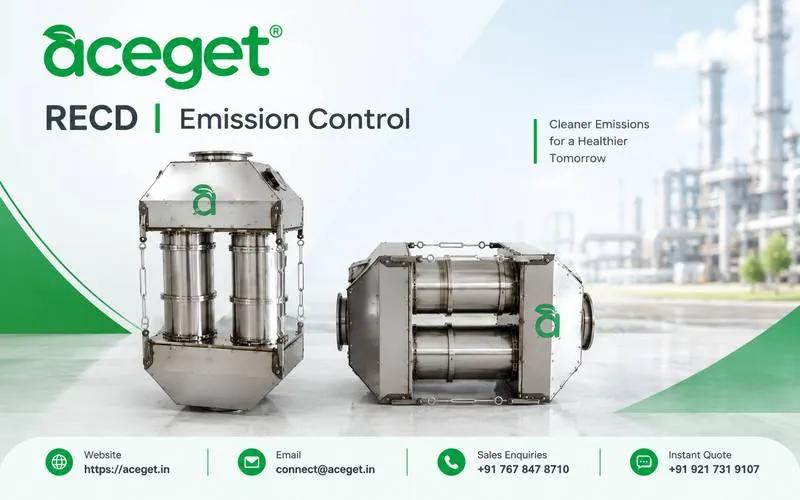
A Retrofit Emission Control Device (RECD) is an emission-control solution designed to be installed on a compatible existing diesel generator. Depending on its technology and configuration, an RECD can help reduce particulate matter emissions without necessarily requiring the entire generator to be replaced.
For organisations evaluating retrofit options, important considerations include:
Compatibility with the existing DG set and its capacity.
Applicable certification and regulatory requirements.
Emission-control performance under the relevant testing procedure.
Installation conditions and exhaust-system compatibility.
Maintenance requirements and availability of technical support.
Documentation and registration requirements, where applicable.
An RECD should not be selected solely on the basis of advertised performance claims. Businesses should verify that the particular device and installation meet the requirements applicable to their generator.
The Central Pollution Control Board's RECD emission compliance testing procedure is a useful technical resource for understanding the testing framework for retrofit emission-control devices.
Practical Steps Businesses Can Take
1. Verify Generator Specifications
Record the generator's rated capacity, engine details, fuel configuration and existing emission-control equipment. These details help determine which regulatory provisions may apply.
2. Review the Latest Official Directions
Check CAQM announcements and the applicable GRAP schedule regularly, particularly during periods when air quality is deteriorating. Do not rely exclusively on previous years' guidelines or third-party summaries.
3. Assess Suitable Emission-Control Options
Where a retrofit solution is applicable, consult qualified suppliers about device compatibility, certification, installation requirements and expected operating conditions.
4. Maintain Proper Documentation
Keep equipment specifications, installation records, inspection reports, service history and relevant certification documents organised. Complete any required approvals or registrations through the appropriate authorities.
5. Train Facility and Maintenance Teams
Ensure that operators understand the applicable restrictions, equipment operating procedures and maintenance requirements. Clear internal procedures can help prevent avoidable compliance errors.
Why Businesses Should Monitor Regulatory Updates
Environmental requirements can change as authorities review pollution-control measures and operational priorities. For example, CAQM approved a revised GRAP schedule in September 2026 that moved certain DG-set-related actions from Stage II to Stage I. This illustrates why businesses should verify the latest schedule instead of assuming that an older stage-wise summary remains current.
The official September 2026 GRAP update published by the Press Information Bureau provides further context on these revisions.
Facilities operating across several NCR locations should also ensure that their compliance planning reflects the requirements relevant to each installation.
Learn More About GRAP Rules for DG Sets
Understanding GRAP restrictions is an important part of planning reliable and responsible generator operations. For a more detailed discussion of the rules affecting diesel generators across the region, read Aceget's GRAP Rules for DG Sets in Delhi NCR: Stage-Wise Guide.
The guide provides additional information for businesses and facility managers seeking to understand the relationship between GRAP stages, DG set operation and emission-control requirements.
Conclusion
Managing DG sets in Delhi NCR requires attention to both routine emission-control requirements and temporary restrictions introduced during periods of poor air quality. Businesses can prepare more effectively by verifying generator specifications, reviewing official regulatory updates, assessing suitable emission-control technology and maintaining accurate documentation.
RECD technology may form part of a suitable compliance strategy where permitted and applicable, but the final decision should be based on the current CAQM directions, relevant technical requirements and the specific characteristics of the installation.
A proactive approach to regulatory awareness and equipment planning can help industrial and commercial facilities make better-informed decisions about their backup power systems.